Heritage Restoration
Brick and stone buildings repaired with mortar that matches the wall, not a hard cement smear.
Who it is for
Older houses, main-street brick, church and hall masonry, stone foundations, and chimneys that were built with lime and are now failing because someone pointed them in cement.
What done looks like
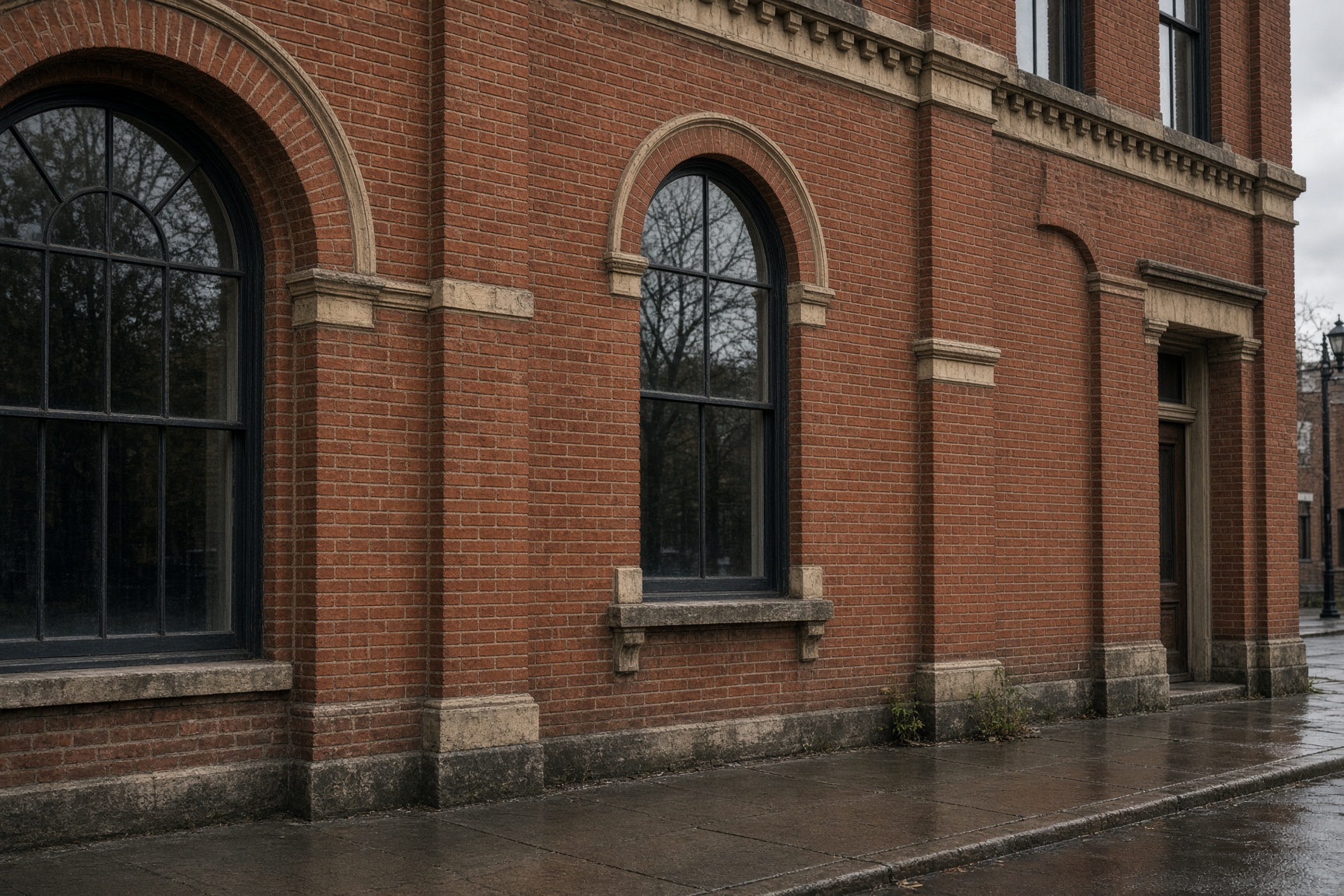
Failed joints cut out and repointed. Spalled brick or stone replaced. Soft mortar where the wall is soft. The face of the building still looks like the building.
What to send
The address, the year if you know it, and close photos of the joints, the brick face, and any place water is getting in.
On this line
Mortar matched to the wall
A hard Portland joint on a soft historic brick traps water. Freeze-thaw then pops the face off the brick and leaves the joint standing proud. Lime mortar belongs where the building was built with lime.
What we repair
Repointing, brick replacement, stone rebuilds, chimney stacks on old buildings, foundation stone, and parging only where a coating belongs. Cement parging over a wall that needs to breathe is how these buildings get worse.
Designated buildings
We are not the heritage planner of record. A designated property may need the township, and sometimes a conservation review, before a joint is cut. We will say that before we price the work.
The test
The repair should be hard to spot from the sidewalk, and the wall should still dry out after a November rain.
Questions
Do you tuckpoint old brick in Algoma?+–
Yes. Joints are ground out to a sound depth and filled with mortar matched to the brick. Colour and profile are part of the job, not an afterthought.
Can you restore a stone foundation?+–
We rebuild and repoint stone foundations that are losing mortar or stone. If the wall is moving, the first conversation is whether it needs structure, drainage, or both — including the excavation line when the ground is the problem.